Neteller Users Email list Database
$890.00 Original price was: $890.00.$89.00Current price is: $89.00./0.00985179 0.00098518
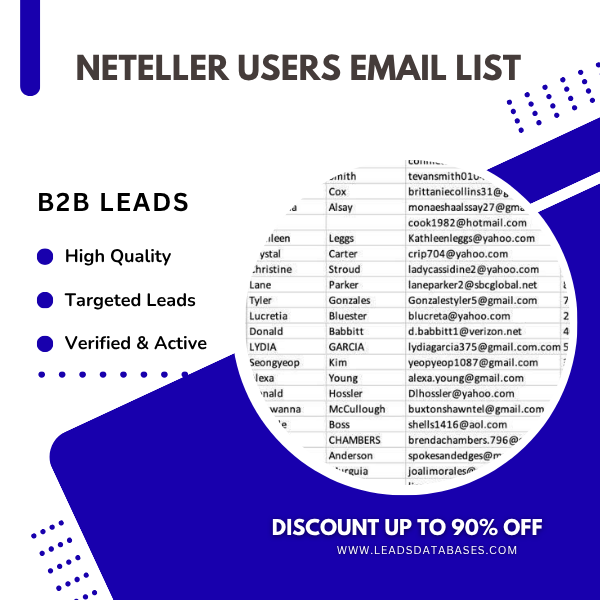
Leads Name: Neteller Users Email List Database
Accuracy Rate: 95%+ Verified, Less Than 3% Bounce
Coverage: All States & Cities
Data Fields: Full Name, Email, Phone Number & Many More
Format: Delivered in Clean Excel (.xlsx), No Duplicates
Special Feature: Fresh & Ready-to-Use Data That Converts
Neteller Users Email List: What It Is, Marketing Considerations, and Responsible Alternatives
Finding the right audience is one of the biggest challenges in digital marketing. Fintech companies, payment service providers, software vendors, online merchants, affiliate marketers, and financial technology businesses all want to reach people who use digital payment solutions. It is easy to assume that buying a Neteller Users email list is the fastest route to new customers, but successful outreach depends on much more than a list of contacts.
Today, privacy regulations, consent requirements, and customer expectations have changed how email marketing works. Modern campaigns perform best when recipients have chosen to receive communications and when messages provide genuine value. Businesses that rely on relevant content, audience segmentation, and permission-based marketing often build stronger customer relationships over time.
If you’re researching a Neteller Users email list, it helps to understand what the term means, how marketers use audience data, and what factors matter when evaluating marketing data providers.
Why Choose Leadsdatabases.com
When evaluating a marketing data provider, the most important factors are transparency, clear product information, and relevance to your campaign goals. Rather than focusing only on the size of a database, buyers should understand what information is available, how audiences can be segmented, and whether the product fits their marketing strategy.
Leadsdatabases.com offers marketing data products for businesses seeking targeted audiences across different industries and market segments.
Clear Product Information
Before purchasing any marketing data, review:
- Available audience categories
- Geographic coverage
- Data fields included
- Delivery format
- Segmentation options
- Intended marketing use
Clear documentation helps buyers make informed decisions.
Audience Segmentation
Different campaigns require different audiences. Depending on the product, segmentation may include factors such as geographic location, industry, or other available marketing categories. Better segmentation supports more relevant communication and reduces unnecessary outreach.
Integration With Marketing Tools
Many marketing teams use:
- Customer Relationship Management (CRM) platforms
- Email marketing software
- Marketing automation tools
- Analytics platforms
Compatible data formats can simplify campaign setup and audience management.
Understanding the Marketing Value of Digital Payment Audiences
People interested in digital wallets and online payment solutions often interact with a wide range of financial technology products. Businesses serving these markets usually focus on education, product awareness, customer support, or business partnerships rather than broad, un-targeted promotions.
Who May Be Interested in This Audience?
Depending on their services, potential users of fintech-related marketing data include:
- Payment technology providers
- E-commerce platforms
- Financial software companies
- SaaS providers
- Online merchants
- Affiliate marketing businesses
- Digital subscription services
- Professional education providers
Each campaign should be tailored to the interests of the intended audience.
Why Audience Relevance Matters
Successful email marketing is built on relevance.
Instead of sending the same message to everyone, marketers often segment campaigns by:
- Customer interests
- Product category
- Geographic region
- Language
- Industry
- Business type
Relevant communication generally creates a better experience for recipients than generic mass emails.
Best Practices for Responsible Email Marketing
Regardless of the audience you want to reach, responsible email marketing is essential.
Focus on Permission-Based Marketing
Permission-based marketing means communicating with people who have agreed to receive marketing messages. This approach helps build trust, improves engagement, and supports compliance with applicable privacy and anti-spam laws.
Create Valuable Content
Useful emails are more likely to be opened and read.
Examples include:
- Product updates
- Educational guides
- Industry news
- Security best practices
- Feature announcements
- Customer success stories
- Webinar invitations
- Helpful resources
Value should come before promotion.
Personalise Communication
Personalisation does not require excessive personal information. Tailoring emails based on audience interests, industry, or previous interactions can make messages more relevant and easier to engage with.
Measure Campaign Performance
Track metrics such as:
- Open rate
- Click-through rate
- Bounce rate
- Conversion rate
- Unsubscribe rate
Reviewing these indicators helps improve future campaigns while maintaining a positive sender reputation.
Frequently Asked Questions
1. What does the term “Neteller Users email list” mean?
The phrase generally refers to a marketing audience associated with people who use the Neteller payment platform. Before using any third-party contact data, businesses should understand applicable privacy laws, consent requirements, and the provider’s documentation. Responsible marketing focuses on transparency, relevant communication, and respecting recipient preferences.
2. Is audience segmentation important in email marketing?
Yes. Segmenting audiences by interests, geography, industry, or other relevant criteria helps marketers create more useful and personalised campaigns. Rather than sending identical emails to every contact, segmentation allows businesses to deliver information that better matches recipient needs and campaign objectives.
3. What should I evaluate before purchasing marketing data?
Review the available product information, supported segmentation options, delivery format, intended use, and compatibility with your marketing tools. Understanding exactly what a provider offers is more valuable than focusing only on the number of contacts advertised.
4. Why is permission-based marketing recommended?
Permission-based marketing helps build trust, improves the customer experience, and supports compliance with privacy and anti-spam requirements. Recipients who expect your emails are generally more likely to engage with relevant content than people who receive unsolicited messages.
5. How can Leadsdatabases.com fit into a marketing strategy?
Leadsdatabases.com provides marketing data products for businesses seeking targeted audiences. Before purchasing any product, review the available details, segmentation options, and intended use to determine whether it aligns with your campaign goals and applicable legal requirements. Effective marketing also depends on valuable content, thoughtful targeting, and responsible communication.