Gmail Users Email List Database
$1,300.00 Original price was: $1,300.00.$130.00Current price is: $130.00./0.01439026 0.00143903
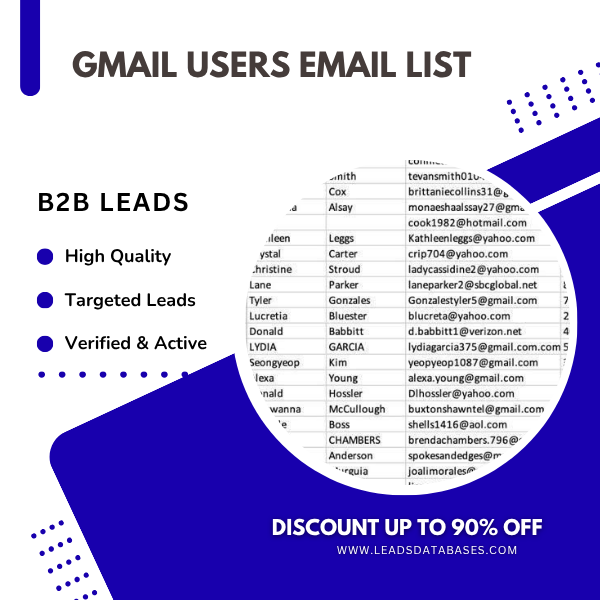
Leads Name: Gmail Users Email List Database
Accuracy Rate: 95%+ Verified, Less Than 3% Bounce
Coverage: All WorldWide States & Cities
Data Fields: Full Name, Email, Phone Number & Many More
Format: Delivered in Clean Excel (.xlsx), No Duplicates
Special Feature: Fresh & Ready-to-Use Data That Converts
Gmail Users Email List: Reach Targeted Gmail Users for Smarter Consumer Marketing
Email marketing remains one of the most effective ways for businesses to communicate with potential and existing customers. Whether you’re launching a new product, promoting seasonal offers, or nurturing long-term customer relationships, email provides a direct channel for sharing relevant information. The challenge, however, is reaching the right audience. Generic campaigns sent to broad contact lists often generate lower engagement, increase marketing costs, and make it harder to measure meaningful results.
A Gmail Users email list helps businesses organise outreach around consumers who use Gmail, Google’s widely used email service. For companies in eCommerce, retail, software, education, financial services, travel, healthcare, and subscription-based businesses, a targeted Gmail email list can support more focused communication than un-targeted advertising.
That said, an email database is only one part of a successful marketing strategy. Effective campaigns rely on audience segmentation, personalised messaging, valuable content, email authentication best practices such as SPF, DKIM, and DMARC, and compliance with regulations including the CAN-SPAM Act, GDPR, and CASL where applicable.
What Is a Gmail Users Email List?
A Gmail Users email list is a consumer contact database containing individuals who use Gmail as their primary or secondary email provider. Businesses use these databases to support email marketing, customer acquisition, newsletter distribution, promotional campaigns, product launches, surveys, and ongoing customer communication.
Unlike a general consumer email database, a Gmail email database focuses specifically on Gmail users, helping marketers organize campaigns around one of the most widely used email platforms.
Depending on the database, available information may include:
- Gmail email address
- Consumer name
- City
- State or province
- ZIP or postal code
- Country
- Demographic categories (where available)
- Consumer interests (where available)
- Audience segmentation fields
Available fields vary depending on the provider and intended business use.
A structured Gmail users database helps businesses spend less time collecting contact information manually and more time creating relevant marketing campaigns.
Who Can Benefit from a Gmail Users Email List?
A Gmail Users email list supports businesses that market directly to consumers. Because Gmail is widely used across personal and professional communication, companies in many industries include Gmail mailing lists as part of their broader digital marketing strategy.
Businesses that may benefit include:
- eCommerce stores
- Online retailers
- Software and SaaS providers
- Subscription-based businesses
- Financial service providers
- Insurance companies
- Educational institutions
- Travel agencies
- Hospitality brands
- Consumer technology companies
- Health and wellness businesses
- Home improvement companies
- Digital marketing agencies
Whether you’re introducing a new service or promoting limited-time offers, a Gmail consumer email list can help organise outreach toward a relevant audience.
Why Choose Leadsdatabases.com
Choosing a Gmail Users email list isn’t simply about buying a large number of contacts. Businesses need organised information that supports audience segmentation, efficient campaign management, and long-term marketing strategies.
Leadsdatabases.com provides structured consumer email databases designed to help businesses simplify customer outreach while supporting responsible email marketing practices.
Organised Consumer Contact Data
Instead of manually collecting contacts from multiple online sources, businesses receive structured information that’s easier to organise and import into CRM or email marketing platforms.
Depending on the selected database, available information may include:
- Gmail email addresses
- Consumer names
- City
- State
- Country
- Postal code
- Consumer segmentation fields where available
This organised format supports efficient campaign planning and customer management.
Geographic Targeting
Many businesses focus on local, regional, or national markets instead of marketing to every consumer.
Depending on your goals, databases may support targeting by:
- City
- State
- Region
- Country
- International markets
Location-based segmentation helps create more relevant and personalised marketing campaigns.
Supports Multiple Marketing Goals
A Gmail Users email list can support a variety of business objectives, including:
- Product launches
- Promotional campaigns
- Email newsletters
- Customer retention
- Educational content
- Event invitations
- Brand awareness
- Customer surveys
- Product announcements
Using one organised consumer mailing database across multiple campaigns helps businesses maintain consistent communication throughout the customer journey.
Saves Valuable Marketing Time
Building a reliable email address database manually requires considerable time and effort.
An organised Gmail email database allows marketing teams to focus on higher-value activities such as:
- Creating engaging content
- Personalising campaigns
- Optimising subject lines
- Testing email performance
- Improving customer engagement
- Analysing marketing results
Less manual research means more time invested in building meaningful customer relationships.
Easy CRM and Marketing Automation Integration
Most businesses manage customer communication through Customer Relationship Management (CRM) software and marketing automation platforms.
A structured Gmail Users email list can often be imported into systems used for:
- CRM software
- Email marketing platforms
- Marketing automation tools
- Customer segmentation
- Lead nurturing
- Sales reporting
This helps simplify campaign management and maintain organised customer records.
What Information Is Included in a Gmail Users Email List?
The usefulness of a Gmail Users email list depends on the quality, organisation, and relevance of the available data. A structured consumer contact database helps businesses identify potential customers and organise targeted email campaigns more efficiently.
Depending on the selected database, available information may include:
- Gmail email address
- Consumer name
- City
- State or province
- ZIP or postal code
- Country
- Demographic information (where available)
- Consumer interest categories (where available)
- Additional audience segmentation fields
Before purchasing a Gmail email database, businesses should review the available fields to ensure they support their marketing objectives.
An organised consumer marketing database also makes it easier to segment audiences, personalise campaigns, improve customer engagement, and integrate contact information into CRM systems and email marketing platforms.
Benefits of Using a Gmail Users Email List
A well-organised Gmail Users email list helps businesses improve audience targeting, streamline email marketing, and support long-term customer engagement. While no database can guarantee campaign performance, organised and relevant contact information makes it easier to create effective marketing campaigns.
Reach a More Relevant Audience
One of the primary advantages of a Gmail email list is the ability to communicate with consumers who actively use Gmail. Instead of sending campaigns to broad, un-targeted audiences, businesses can organise outreach around a specific group of email users.
This targeted approach supports businesses promoting:
- eCommerce products
- Retail offers
- Software subscriptions
- Online courses
- Financial services
- Insurance products
- Travel packages
- Health and wellness services
- Consumer technology
The closer your message aligns with customer interests, the more relevant your campaign becomes.
Improve Consumer Lead Generation
A structured consumer email database helps businesses identify potential customers without spending countless hours researching contact information.
Marketing teams commonly use a Gmail Users email list for:
- Customer acquisition
- Product launches
- Newsletter campaigns
- Promotional offers
- Seasonal marketing
- Customer retention
- Brand awareness
Rather than focusing on manual data collection, businesses can invest more time in campaign strategy and customer communication.
Support Personalised Email Marketing
Consumers are more likely to engage with emails that feel relevant to their interests.
Personalisation can include:
- Customer name
- Geographic location
- Product recommendations
- Seasonal offers
- Interest categories
- Customer lifecycle stage
Thoughtful personalisation helps improve customer engagement while creating a better overall user experience.
Save Time and Marketing Resources
Building a consumer contact list manually requires considerable research.
A structured Gmail users database allows marketing teams to focus on activities that directly contribute to campaign success, including:
- Writing compelling email copy
- Creating valuable newsletters
- Testing subject lines
- Improving calls to action
- Measuring campaign performance
- Refining audience segmentation
Reducing manual work helps businesses allocate more time to strategic marketing initiatives.
Build Long-Term Customer Relationships
Successful email marketing extends beyond promotional messages.
Businesses often use email to deliver:
- Buying guides
- Product recommendations
- Educational articles
- Industry updates
- Customer success stories
- Exclusive subscriber content
- Holiday and seasonal promotions
Providing consistent value helps strengthen customer relationships and encourages ongoing engagement.
Best Practices for Email Marketing to Gmail Users
Purchasing a Gmail Users email list is only the beginning. The effectiveness of your campaigns depends on creating useful content, respecting recipient preferences, and following established email marketing best practices.
Segment Your Audience
Every consumer has different interests, purchasing habits, and communication preferences.
Instead of sending one generic campaign, organise your consumer mailing database into smaller segments.
Segment by Geographic Location
Location-based segmentation allows businesses to create campaigns for:
- Cities
- States
- Regions
- Countries
Localised messaging often feels more relevant than broad national campaigns.
Segment by Consumer Interests
If available, organise contacts based on interest categories such as:
- Fashion
- Electronics
- Home and garden
- Health and wellness
- Travel
- Education
- Personal finance
- Software
Interest-based campaigns help improve relevance and customer engagement.
Segment by Customer Lifecycle
Different audiences require different messaging.
Examples include:
- New prospects
- Existing customers
- Newsletter subscribers
- Repeat buyers
- Inactive customers
Matching your message to the customer journey supports better communication and stronger relationships.
Create Valuable Email Content
Consumers receive marketing emails every day.
Instead of sending constant sales promotions, focus on content that educates or helps the recipient.
Examples include:
- Buying guides
- Product tutorials
- Industry insights
- Seasonal shopping tips
- Frequently asked questions
- Product comparison articles
- Exclusive subscriber resources
Helpful content supports trust and keeps subscribers engaged over time.
Personalise Every Campaign
Effective personalisation goes beyond simply inserting a first name.
Businesses can tailor campaigns using:
- Local promotions
- Product categories
- Consumer interests
- Previous purchases (where applicable)
- Seasonal recommendations
- Customer preferences
Relevant communication generally performs better than one-size-fits-all marketing.
Follow Email Marketing Regulations
Responsible email marketing protects both businesses and consumers.
Organisations using a Gmail Users email list should comply with applicable regulations, including:
- CAN-SPAM Act (United States)
- GDPR (European Union)
- CASL (Canada)
Good email marketing practices include:
- Using accurate sender information
- Writing honest subject lines
- Clearly identifying your business
- Providing unsubscribe options where legally required
- Respecting recipient privacy and communication preferences
Businesses should also follow email authentication standards such as SPF, DKIM, and DMARC to help improve email deliverability and reduce the risk of spoofing or phishing.
Monitor Campaign Performance
The most successful email marketers continuously evaluate and improve their campaigns.
Important metrics include:
- Delivery rate
- Open rate
- Click-through rate (CTR)
- Conversion rate
- Bounce rate
- Unsubscribe rate
- Customer engagement
Regular analysis helps businesses refine messaging, improve segmentation, and make better marketing decisions over time.
How to Choose the Right Gmail Users Email List
Not every Gmail Users email list is suitable for every business. Before purchasing a Gmail email database, evaluate your target audience, campaign objectives, and marketing workflow.
Define Your Target Audience
Start by identifying the consumers you want to reach.
Consider factors such as:
- Geographic location
- Consumer interests
- Product categories
- Market segment
- Customer demographics (where available)
Clear goals help you select a database that aligns with your marketing strategy.
Review Available Data Fields
Different providers offer different levels of information.
Useful fields may include:
- Gmail email address
- Consumer name
- City
- State
- Country
- Postal code
- Interest categories
- Audience segmentation fields
Reviewing available data before purchasing helps ensure the database supports your outreach goals.
Consider Geographic Coverage
Some businesses focus on local markets, while others serve national or international audiences.
Depending on your objectives, you may need:
- Local consumer contacts
- State-level databases
- Nationwide coverage
- International consumer email lists
Choosing the appropriate geographic scope keeps campaigns relevant and cost-effective.
Ensure CRM Compatibility
Your consumer email database should integrate smoothly with the tools you already use.
Common platforms include:
- CRM software
- Email marketing platforms
- Marketing automation systems
- Customer data platforms
- Analytics tools
Easy integration reduces manual work and supports efficient campaign management.
Choose a Transparent Data Provider
Before purchasing a Gmail Users email list, review details such as:
- Available data fields
- Geographic coverage
- Intended business use
- File formats
- Delivery methods
Working with a provider that clearly explains its offerings helps businesses make informed purchasing decisions and select a database that fits their marketing objectives.
Conclusion
A Gmail Users email list can be a valuable marketing resource for businesses that want to connect with consumers who use Gmail for personal or professional communication. Whether your goal is customer acquisition, product promotion, newsletter distribution, or long-term customer engagement, a well-organised Gmail email database helps streamline audience targeting and reduce the time spent building contact lists manually.
Leadsdatabases.com provides structured consumer email databases designed to support B2C marketing across a variety of industries. Instead of relying on un-targeted outreach, businesses can organise campaigns around relevant consumer segments and integrate contact information into their existing CRM, marketing automation, and email marketing platforms.
Like any marketing resource, a Gmail Users email list works best when paired with valuable content, audience segmentation, personalised messaging, responsible email authentication practices, and compliance with applicable regulations. Businesses that focus on helping customers not simply selling to them are more likely to build trust, improve customer engagement, and support sustainable long-term growth.
Frequently Asked Questions
1. What is a Gmail Users email list?
A Gmail Users email list is a consumer contact database containing information about individuals who use Gmail as their email service. Depending on the provider, it may include Gmail email addresses, names, geographic information, and additional segmentation fields where available. Businesses use these databases for email marketing, customer outreach, product announcements, newsletters, promotional campaigns, and broader digital marketing initiatives while following applicable privacy and email marketing regulations.
2. Who can benefit from a Gmail Users email list?
A Gmail email list is useful for businesses that market directly to consumers, including eCommerce retailers, software companies, educational organisations, financial service providers, travel businesses, subscription services, healthcare brands, and digital marketing agencies. A targeted consumer email database helps these organisations communicate with relevant audiences more efficiently than broad advertising campaigns, especially when combined with personalised messaging and valuable content.
3. What information is typically included in a Gmail email database?
The contents of a Gmail Users email list vary depending on the provider and intended business use. Common fields may include Gmail email addresses, consumer names, city, state, country, postal code, and audience segmentation data where available. Some consumer marketing databases also include demographic or interest-based categories to help businesses create more relevant and personalised email marketing campaigns.
4. How can businesses improve results from Gmail email marketing campaigns?
Businesses can improve results by combining a quality Gmail Users email list with audience segmentation, relevant content, and consistent optimisation. Personalising emails, writing clear subject lines, providing useful information, and monitoring key metrics such as open rates, click-through rates, conversions, and unsubscribe rates all contribute to stronger campaign performance. Following best practices for email deliverability, including SPF, DKIM, and DMARC, can also help emails reach recipients more reliably.
5. Why choose Leadsdatabases.com for a Gmail Users email list?
Leadsdatabases.com offers organised Gmail Users email databases designed to support business marketing, customer outreach, and lead generation. Businesses can use the data to simplify prospecting, organise audience segments, and integrate contacts into CRM systems and email marketing platforms. Rather than making unsupported performance claims, the platform focuses on providing structured contact data that businesses can incorporate into a well-planned digital marketing strategy while following responsible email marketing practices and applicable regulations.