Credit Card Holders Email List
$199.00 Original price was: $199.00.$99.00Current price is: $99.00./0.00220282 0.00109587
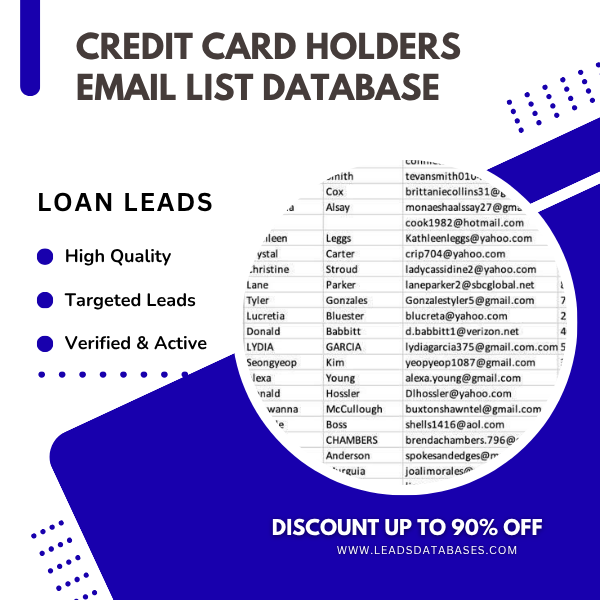
Leads Name: Credit Card Holders Email List
Accuracy Rate: 95%+ Verified, Less Than 3% Bounce
Data Fields: Full Name, Email, Phone Number & Many More
Format: Delivered in Clean Excel (.xlsx), No Duplicates
Special Feature: Fresh & Ready-to-Use Data That Converts
Credit Card Holders Email List: A Complete Guide for Smarter Consumer Marketing
A Credit Card Holders Email List is a targeted consumer marketing database that helps businesses reach individuals who use credit cards for everyday purchases, travel, online shopping, and financial services. When sourced responsibly and used in compliance with applicable email marketing laws, it can support more relevant outreach, improve audience targeting, and help businesses connect with consumers who are more likely to be interested in their offers.
Credit Card Holders Email List: Reach the Right Consumer Audience
Finding qualified consumer prospects is one of the biggest challenges in digital marketing. Advertising costs continue to increase, inboxes are crowded, and customers have become more selective about the emails they open. Sending the same campaign to a broad audience often results in lower engagement and wasted marketing spend.
A Credit Card Holders Email List helps businesses focus on a more relevant audience by providing access to consumer contact data for targeted marketing campaigns. Instead of relying solely on broad advertising or untargeted outreach, marketers can build campaigns around consumer segments that better match their products or services.
Businesses across financial services, insurance, travel, retail, eCommerce, education, subscription services, and consumer technology often use targeted consumer databases to improve campaign efficiency. The goal is not simply to reach more people but to reach the right people with valuable, relevant content.
However, not all email databases offer the same value. Data accuracy, segmentation, transparency, and responsible sourcing are far more important than database size. An outdated list can increase bounce rates and reduce campaign performance, while a well-maintained database supports better audience targeting and more meaningful customer engagement.
Why Choose Leadsdatabases.com
Choosing a marketing database provider requires more than comparing prices. Businesses should evaluate data quality, segmentation options, customer support, transparency, and compatibility with their marketing systems.
Leadsdatabases.com offers a wide selection of consumer and business marketing databases designed for organisations that want to build more focused outreach campaigns.
Industry Specific Consumer Databases
Rather than providing only general consumer contacts, Leadsdatabases.com offers specialized databases for numerous industries and consumer segments. This allows businesses to select audiences that closely align with their products, services, or marketing objectives.
Flexible Audience Segmentation
Targeted marketing performs better when businesses can narrow their audience. Depending on the available dataset, segmentation options may include:
- Country
- State or province
- City
- ZIP or postal code
- Age range
- Gender
- Consumer interests
- Income related categories
- Industry specific classifications
These filters help marketers create campaigns that are more relevant to their audience.
Saves Time and Resources
Building a consumer database internally requires research, verification, and continuous maintenance. Purchasing a professionally organised database allows marketing teams to spend more time developing campaigns and less time collecting contact information.
Supports Multiple Industries
A Credit Card Holders Email List can support outreach for businesses such as:
- Banks
- Credit unions
- Insurance agencies
- FinTech companies
- Travel agencies
- Airlines
- Hotels
- Luxury retailers
- Online stores
- Subscription businesses
- Consumer electronics brands
- Educational platforms
Success depends on matching the audience with relevant products or services.
Easy Integration
Marketing teams commonly import consumer databases into CRM platforms and email marketing software. Standard file formats simplify integration with existing sales and marketing workflows.
What Is a Credit Card Holders Email List?
A Credit Card Holders Email List is a business-to-consumer (B2C) marketing database containing contact information for consumers within specific credit card user segments.
The exact information included varies by provider, but a database may contain:
- Full name
- Email address
- City
- State
- Country
- ZIP or postal code
- Demographic information
- Consumer interest categories
- Additional segmentation fields, where available
Responsible providers clearly explain which data fields are included before purchase.
Common Use Cases
Businesses use a Credit Card Holders Email List for marketing campaigns related to:
- Travel promotions
- Loyalty and rewards programs
- Insurance services
- Financial education
- Consumer finance products
- Retail discounts
- Subscription services
- Software products
- Luxury goods
- Online shopping offers
The database should always be paired with relevant content that provides value to recipients.
Who Benefits Most?
Industries that commonly use targeted consumer email databases include:
- Financial institutions
- Insurance providers
- Travel companies
- E-commerce businesses
- Retail brands
- Consumer technology companies
- Educational service providers
- Hospitality businesses
- Membership organisations
Targeted consumer data allows these businesses to create more personalised marketing campaigns.
Benefits of Using a Credit Card Holders Email List
Better Audience Targeting
Instead of marketing to a broad audience, businesses can focus on consumers whose profiles align with their products or services.
Improved Marketing Efficiency
Well segmented databases help reduce irrelevant outreach, making marketing campaigns more focused and easier to measure.
Supports Personalised Email Marketing
Personalised campaigns generally perform better than generic promotional emails. Segmenting audiences by location, interests, or demographics allows businesses to create more relevant messaging.
Faster Customer Acquisition
A qualified consumer database gives businesses a starting point for outreach, reducing the time needed to build prospect lists from scratch.
Works Across Multiple Marketing Channels
Although often used for email marketing, consumer databases may also support:
- CRM campaigns
- Direct marketing
- Customer relationship management
- Marketing automation
- Audience analysis
- Sales prospecting
How to Choose the Right Credit Card Holders Email List
Not every database offers the same level of quality. Before purchasing, consider these factors.
Data Accuracy
Accurate contact information supports better campaign performance. Ask providers how frequently their databases are reviewed or updated.
Audience Segmentation
Choose a database that offers filters matching your target market. Relevant segmentation improves campaign relevance and reduces unnecessary outreach.
Transparency
Reliable providers explain:
- Available data fields
- Geographic coverage
- Delivery format
- Intended marketing use
- Customer support options
Clear documentation helps businesses make informed purchasing decisions.
Compliance
Businesses should ensure their marketing activities comply with applicable privacy and email marketing regulations in every region where they operate. Responsible email practices include honoring unsubscribe requests and sending relevant communications.
CRM Compatibility
Before purchasing, confirm that the database format can be imported into your preferred CRM or email marketing platform.
Best Practices for Email Marketing Success
Purchasing a quality Credit Card Holders Email List is only the first step. Campaign execution determines long-term results.
Create Valuable Content
Every email should answer an important question:
Why should the recipient open this message?
Educational content, practical advice, exclusive promotions, and useful resources generally outperform repetitive sales messages.
Personalise Your Campaigns
Simple personalisation improves relevance.
Examples include:
- Recipient name
- Geographic location
- Product recommendations
- Seasonal promotions
- Customer interests
Optimise Subject Lines
Clear and honest subject lines help build trust. Avoid misleading language or exaggerated promises.
Design for Mobile Devices
Many consumers read email on smartphones. Use responsive layouts, concise paragraphs, and clear calls to action for a better reading experience.
Monitor Key Performance Metrics
Track important email marketing metrics, including:
- Open rate
- Click-through rate
- Bounce rate
- Conversion rate
- Unsubscribe rate
Reviewing campaign data helps improve future performance.
Maintain Database Hygiene
Regularly remove invalid email addresses, duplicate records, and hard bounces. Maintaining a clean database supports sender reputation and improves deliverability.
Conclusion
A Credit Card Holders Email List can help businesses improve audience targeting, support customer acquisition, and create more relevant consumer marketing campaigns. The value of any database depends on data quality, appropriate segmentation, and responsible marketing practices rather than simply the number of records.
Leadsdatabases.com provides businesses with targeted consumer marketing databases designed for a variety of industries and campaign goals. By combining quality data with personalised messaging, compliance-focused email marketing, and continuous campaign optimisation, businesses can build stronger customer relationships and improve the effectiveness of their outreach over time.
Frequently Asked Questions
1. What is a Credit Card Holders Email List?
A Credit Card Holders Email List is a business-to-consumer (B2C) marketing database that contains contact information for individuals who fall within specific credit card user segments. Depending on the provider, the database may include names, email addresses, geographic details, and demographic information. Businesses use these lists to promote financial services, retail products, travel offers, subscription services, and other consumer-focused solutions through targeted marketing campaigns.
2. Who can benefit from using a Credit Card Holders Email List?
Many industries can benefit from a targeted Credit Card Holders Email List, including financial institutions, insurance companies, travel agencies, hotels, airlines, eCommerce businesses, luxury retailers, consumer technology brands, educational platforms, and subscription-based services. By reaching a more relevant audience, businesses can improve personalisation, support lead generation, and create marketing campaigns that better align with customer interests and purchasing behavior.
3. What information is typically included in a Credit Card Holders Email List?
The exact fields depend on the data provider, but a Credit Card Holders Email List may include a recipient’s name, email address, city, state, country, ZIP or postal code, demographic information, and other marketing-related segmentation fields where available. Reputable providers clearly explain what information is included before purchase so businesses can determine whether the database fits their marketing objectives and customer targeting requirements.
4. How should businesses use a Credit Card Holders Email List responsibly?
Businesses should use any Credit Card Holders Email List in accordance with applicable privacy and email marketing laws in the regions where they operate. Responsible practices include sending relevant and valuable content, identifying the sender, honoring unsubscribe requests promptly, maintaining accurate mailing lists, and avoiding misleading subject lines. Following these practices helps build trust, protects sender reputation, and supports long-term email marketing success.
5. Why is audience segmentation important when purchasing a Credit Card Holders Email List?
Audience segmentation allows businesses to focus their marketing efforts on consumers who are more likely to be interested in their products or services. Instead of sending broad campaigns to every contact, marketers can filter records by geography, age group, gender, consumer interests, or other available criteria. Better segmentation often leads to more relevant messaging, improved customer engagement, stronger campaign performance, and more efficient use of marketing resources.