USA Coffee Shops Email List Database
$650.00 Original price was: $650.00.$65.00Current price is: $65.00./0.00719513 0.00071951
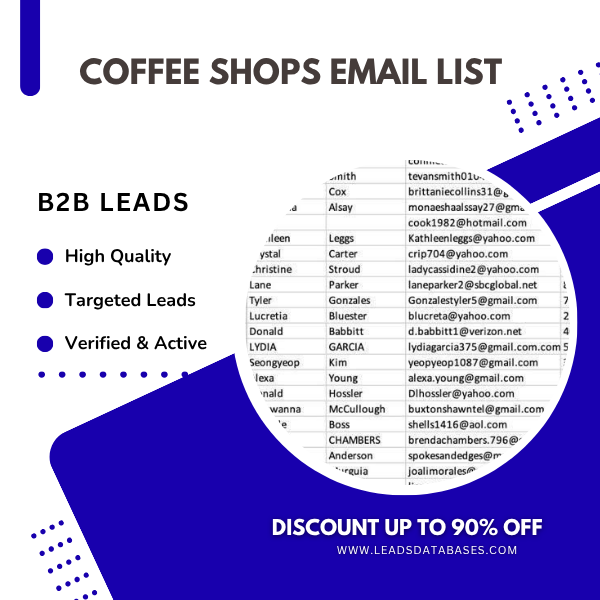
Leads Name: USA Coffee Shops Email List Database
Accuracy Rate: 95%+ Verified, Less Than 3% Bounce
Coverage: All USA States & Cities
Data Fields: Full Name, Email, Phone Number & Many More
Format: Delivered in Clean Excel (.xlsx), No Duplicates
Special Feature: Fresh & Ready-to-Use Data That Converts
Coffee Shops Email List: Reach Café Owners, Coffee Chains, and Specialty Coffee Businesses
A Coffee Shops email list helps businesses connect with coffee shops, cafés, specialty coffee houses, coffee roasters, espresso bars, bakery cafés, and coffee chains through organised business contact information. If your company sells products or services to the coffee industry, a targeted business database can make prospecting more efficient by helping you reach relevant decision-makers instead of spending hours researching individual businesses.
The coffee industry supports a wide range of suppliers. Commercial coffee equipment manufacturers, coffee bean distributors, POS software providers, payment processing companies, packaging suppliers, furniture manufacturers, digital marketing agencies, foodservice vendors, and cleaning service providers all market to coffee businesses. The challenge is identifying the right contacts and delivering relevant outreach.
An organized Coffee Shops email database helps reduce manual research and supports more focused B2B marketing campaigns. Rather than contacting unrelated businesses, companies can target café owners, purchasing managers, operations managers, franchise operators, and other professionals responsible for evaluating products and services.
Not every business database is equally useful, however. Data quality, organisation, audience relevance, and transparency all matter when selecting a provider. hy Choose Leadsdatabases.com
Finding qualified coffee businesses manually can be time-consuming. Independent cafés, artisan coffee shops, regional coffee chains, coffee roasters, and franchise locations operate across different markets and often have unique purchasing needs. Leadsdatabases.com offers business contact databases designed to help companies organise their outreach more efficiently.
Industry-Focused Business Contacts
Instead of relying on broad business directories, businesses can use a Coffee Shops email list that focuses specifically on companies operating within the coffee and café industry.
Depending on the database, business categories may include:
- Independent coffee shops
- Specialty coffee cafés
- Coffee chains
- Coffee franchises
- Artisan coffee houses
- Coffee roasters
- Espresso bars
- Bakery cafés
- Drive-thru coffee shops
- Coffee kiosks
- Gourmet coffee retailers
Industry-focused data helps marketers create more relevant campaigns while reducing unnecessary outreach.
Organized Business Information
Available records may include:
- Business name
- Contact name
- Job title
- Business email address
- Phone number
- Website
- City
- State or province
- Country
- Industry classification
Available data fields vary depending on the database.
Save Valuable Prospecting Time
Building a prospect list from online directories, company websites, and local business listings requires significant effort. A structured coffee business email database allows sales and marketing teams to spend more time engaging potential customers and less time gathering contact information.
Supports Multiple Marketing Strategies
Businesses use a Coffee Shops mailing list for:
- B2B email marketing
- Sales prospecting
- Appointment setting
- CRM enrichment
- Product launches
- Market research
- Business development
- Partnership outreach
- Account-based marketing
- Regional expansion
Campaign success still depends on relevant messaging, audience segmentation, and compliance with applicable email marketing regulations.
What Is a Coffee Shops Email List?
A Coffee Shops email list is a business contact database containing companies that operate coffee-related businesses. Rather than targeting consumers, these databases focus on commercial organizations and professionals responsible for purchasing products, evaluating vendors, and managing business operations.
Companies use these databases to introduce products, generate qualified leads, build supplier relationships, and support long-term sales strategies.
Types of Coffee Businesses Included
Depending on the provider, a Coffee Shops business email database may include several categories of businesses.
Independent Coffee Shops
Local cafés often purchase:
- Commercial espresso machines
- Coffee grinders
- Coffee beans
- Milk alternatives
- Bakery products
- Point-of-sale systems
- Payment terminals
- Loyalty software
- Furniture
- Café décor
- Commercial cleaning services
Specialty Coffee Shops
Specialty coffee businesses typically focus on premium beverages, customer experience, and high-quality brewing methods. These businesses may invest in commercial brewing equipment, specialty coffee beans, sustainable packaging, digital ordering systems, and customer loyalty platforms.
Coffee Roasters
Coffee roasting companies require products and services such as:
- Coffee packaging
- Label printing
- Warehouse equipment
- Inventory management software
- Shipping supplies
- Distribution services
- Quality control equipment
Coffee Chains and Franchise Locations
Regional and national coffee chains often evaluate vendors offering:
- Enterprise POS software
- Employee scheduling systems
- Inventory management solutions
- Commercial refrigeration
- Foodservice equipment
- Marketing technology
- Payment processing services
Bakery Cafés and Coffee Retailers
Many cafés combine coffee with pastries, sandwiches, and light meals. These businesses frequently work with suppliers of bakery equipment, refrigeration systems, display cases, food packaging, commercial furniture, and kitchen technology.
Benefits of Using a Coffee Shops Email Database
A well-organized Coffee Shops email database supports more than basic contact management. It helps businesses improve targeting, personalize outreach, and streamline sales efforts.
Reach Decision-Makers More Efficiently
Instead of contacting unrelated businesses, marketers can focus on organizations already operating in the coffee industry. Better targeting helps sales teams spend more time speaking with qualified prospects.
Improve Audience Segmentation
Coffee businesses vary by size, location, and business model. Segmenting contacts allows marketers to create campaigns tailored for:
- Independent cafés
- Coffee franchises
- Coffee roasters
- Specialty coffee houses
- Drive-thru coffee businesses
- Multi-location coffee chains
- Gourmet coffee retailers
- Café bakeries
Relevant messaging often generates better engagement than one-size-fits-all campaigns.
Support Lead Generation
A Coffee Shops contact list can support:
- B2B lead generation
- Sales outreach
- Product promotions
- Vendor introductions
- Partnership opportunities
- Market expansion
- Customer acquisition
Many businesses integrate contact databases into broader CRM and sales development workflows.
Reduce Research Time
Manual prospecting can consume hours each week. Organized business contact information helps reduce repetitive research and allows teams to focus on building relationships with potential customers instead of collecting basic business details.
Expand into New Markets
Whether entering a new city, state, or country, businesses can use a coffee industry mailing list to identify coffee businesses operating within their target regions. Geographic segmentation also supports localized marketing campaigns and territory planning.
Common Businesses That Market to Coffee Shops
Coffee shops purchase a wide variety of products and services beyond coffee beans. Understanding who sells to cafés helps businesses determine whether a Coffee Shops email list aligns with their marketing goals.
Coffee Equipment Manufacturers
Coffee businesses regularly invest in commercial equipment to improve beverage quality and operational efficiency.
Products may include:
- Commercial espresso machines
- Coffee grinders
- Brewers
- Water filtration systems
- Ice machines
- Refrigeration equipment
- Blenders
Equipment suppliers often use targeted outreach to introduce new products, maintenance programs, or replacement solutions.
Coffee Bean Suppliers and Roasters
Wholesale coffee suppliers market specialty blends, single-origin coffee, espresso beans, and private-label roasting services to cafés, restaurants, and coffee retailers.
Many also promote seasonal offerings, sustainable sourcing, and wholesale partnership programs.
POS and Restaurant Technology Providers
Technology has become an essential part of modern café operations.
Coffee businesses commonly evaluate:
- Point-of-sale (POS) systems
- Mobile ordering platforms
- Contactless payment solutions
- Inventory management software
- Employee scheduling software
- Customer loyalty programs
- Gift card systems
- Online ordering solutions
Technology companies often target coffee shop owners looking to improve customer service and streamline daily operations.
Foodservice and Packaging Suppliers
Coffee shops purchase products such as:
- Disposable coffee cups
- Compostable cups and lids
- Paper bags
- Food containers
- Napkins
- Coffee sleeves
- Custom packaging
- Branded takeaway supplies
Suppliers use B2B marketing to connect with cafés seeking reliable inventory partners.
Marketing and Creative Agencies
Coffee businesses frequently invest in marketing to attract new customers and strengthen brand recognition.
Services include:
- Website design
- Local SEO
- Social media management
- Email marketing
- Branding
- Graphic design
- Photography
- Content marketing
A Coffee Shops business email list helps agencies introduce these services to relevant businesses.
Best Practices for Marketing to Coffee Shops
Purchasing a Coffee Shops email database is only one part of a successful lead generation strategy. Campaign performance depends on relevance, personalization, and consistent communication.
Understand Different Types of Coffee Businesses
Not every coffee business has the same priorities.
For example:
- Independent cafés often value local marketing and customer loyalty.
- Specialty coffee shops may focus on premium equipment and high-quality ingredients.
- Coffee chains often evaluate operational efficiency, scalability, and technology.
- Coffee roasters prioritize production, packaging, and distribution.
Understanding these differences allows businesses to create more relevant messaging.
Personalize Your Outreach
Avoid sending identical emails to every business.
Reference the recipient’s business type, explain how your product or service addresses a specific challenge, and keep your message focused on practical value.
Personalized communication is more likely to start meaningful conversations than generic promotional emails.
Highlight Business Benefits
Instead of listing product features, explain how your solution can help coffee businesses:
- Improve workflow
- Increase operational efficiency
- Enhance customer experience
- Simplify inventory management
- Support repeat business
- Reduce administrative tasks
- Strengthen day-to-day operations
Business owners generally respond better to outcomes than technical specifications.
Keep Emails Short and Relevant
Coffee shop owners and managers are busy running daily operations.
An effective email usually includes:
- A clear subject line
- A brief introduction
- A relevant value proposition
- One straightforward call to action
Simple, easy-to-read emails encourage higher engagement.
Segment Your Campaigns
Audience segmentation improves relevance.
Consider grouping contacts by:
- Business type
- Geographic location
- Company size
- Independent or franchise operation
- Specialty coffee or traditional café
- Regional markets
Smaller, targeted campaigns often produce better engagement than broad mass emails.
Follow Responsible Email Marketing Practices
Businesses should comply with applicable privacy laws and email marketing regulations in the countries where recipients are located. Maintaining accurate business information, honoring opt-out requests, and sending relevant communications help build credibility and support long-term customer relationships.
How to Choose the Right Coffee Shops Email List
Before purchasing a Coffee Shops mailing list, evaluate whether the database matches your target market and sales objectives.
Review Industry Coverage
Look for databases that include a broad range of coffee-related businesses, such as:
- Independent coffee shops
- Coffee chains
- Specialty cafés
- Coffee roasters
- Bakery cafés
- Espresso bars
- Coffee kiosks
- Franchise locations
A well-defined industry focus helps improve campaign accuracy.
Check Available Data Fields
A useful business database should provide enough information to support segmentation and personalization.
Common fields include:
- Business name
- Contact name
- Job title
- Business email address
- Phone number
- Website
- City
- State
- Country
- Industry category
The available fields may differ depending on the provider.
Consider Geographic Targeting
Some businesses market locally, while others operate nationally or internationally.
Selecting a database with geographic filtering allows marketers to target coffee businesses in specific cities, regions, states, or countries, making localized campaigns easier to manage.
Support CRM and Sales Workflows
Many organizations import contact databases into CRM platforms to organize prospects, manage follow-ups, and track sales opportunities. A structured database can simplify this process and reduce manual data entry.
Conclusion
A Coffee Shops email list is a practical resource for businesses that market products and services to cafés, coffee chains, coffee roasters, specialty coffee shops, and related foodservice businesses. Whether your company provides commercial coffee equipment, coffee beans, POS systems, payment solutions, packaging, digital marketing, furniture, or operational software, a targeted business contact database helps you identify relevant prospects more efficiently.
Leadsdatabases.com provides business contact databases designed to support B2B lead generation, sales prospecting, and email marketing. Combined with audience segmentation, personalized outreach, and responsible marketing practices, a well-organized Coffee Shops email database can help businesses build stronger relationships, improve campaign relevance, and support sustainable business growth.
Frequently Asked Questions
1. What is a Coffee Shops email list?
A Coffee Shops email list is a business contact database that contains information about coffee shops, cafés, specialty coffee businesses, coffee roasters, espresso bars, and coffee chains. Depending on the provider, the database may include business names, contact names, job titles, business email addresses, phone numbers, websites, locations, and industry classifications. Companies use these lists to support B2B email marketing, sales prospecting, lead generation, partnership outreach, and customer acquisition.
2. Who can benefit from using a Coffee Shops email database?
A Coffee Shops email database is useful for businesses that supply products or services to the coffee industry. This includes commercial coffee equipment manufacturers, coffee bean wholesalers, packaging suppliers, POS software companies, payment processing providers, furniture manufacturers, digital marketing agencies, foodservice distributors, commercial cleaning companies, and business consultants. A targeted database helps these businesses connect with relevant decision-makers and create more focused marketing campaigns.
3. What information is typically included in a Coffee Shops mailing list?
The contents of a Coffee Shops mailing list vary by provider, but business records commonly include the company name, contact person’s name, job title, business email address, phone number, website, city, state or province, country, and business category. Some databases also allow filtering by location or business type, making it easier to build targeted outreach campaigns and organize contacts within a CRM or sales platform.
4. How should businesses use a Coffee Shops email list effectively?
To get the most value from a Coffee Shops email list, businesses should segment contacts based on factors such as business type, location, or company size, then create personalized email campaigns that address specific business needs. Messages should be concise, relevant, and focused on solving operational challenges rather than simply promoting products. Following applicable privacy and email marketing regulations also helps build trust and supports long-term business relationships.
5. Why consider Leadsdatabases.com for a Coffee Shops email list?
Leadsdatabases.com offers business contact databases designed to help companies reach coffee shops and related businesses more efficiently. Depending on the selected database, customers may have access to organized business information that supports lead generation, sales prospecting, CRM enrichment, and B2B email marketing. Rather than making unsupported superiority claims, the emphasis is on providing structured business data that helps organizations identify relevant prospects and improve the efficiency of their outreach efforts.