USA Running Tracks Email List Database
$390.00 Original price was: $390.00.$39.00Current price is: $39.00./0.00431708 0.00043171
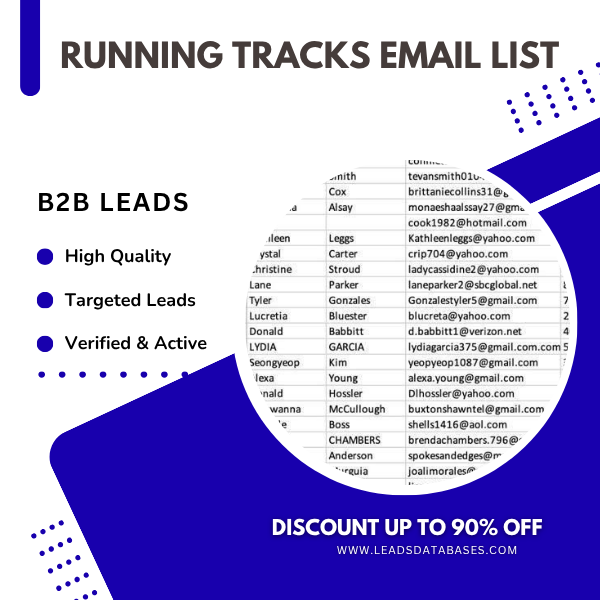
Leads Name: USA Running Tracks Email List Database
Accuracy Rate: 95%+ Verified, Less Than 3% Bounce
Coverage: All USA States & Cities
Data Fields: Full Name, Email, Phone Number & Many More
Format: Delivered in Clean Excel (.xlsx), No Duplicates
Special Feature: Fresh & Ready-to-Use Data That Converts
Running Tracks Email List: Connect with Sports Facilities and Athletic Decision-Makers
Finding the right buyers is often harder than selling a great product. If your business serves sports facilities, schools, universities, municipalities, or athletic organisations, reaching the people responsible for purchasing can take significant time. Facility managers, athletic directors, procurement teams, and recreation administrators rarely appear in one public directory, making manual prospecting both slow and expensive.
A Running Tracks Email List helps simplify B2B outreach by providing access to business contacts associated with organizations that operate or maintain running tracks and athletic facilities. Instead of spending hours researching websites, searching business directories, and verifying contact information, your sales team can focus on starting meaningful conversations with qualified prospects.
Whether you provide athletic equipment, track construction services, resurfacing solutions, facility maintenance, sports technology, safety products, or event management services, targeted business data can support more relevant marketing campaigns. The key is using a well-organised database alongside personalised outreach and responsible email marketing practices.
What Is a Running Tracks Email List?
A Running Tracks Email List is a business contact database containing organisations involved in operating, managing, maintaining, or supporting running tracks and athletic facilities. Depending on the source and available public business information, the database may include contacts from schools, colleges, universities, municipal recreation departments, sports complexes, athletic clubs, training centers, and stadium operators.
Rather than functioning as a consumer mailing list, it is designed for B2B lead generation, helping companies connect with businesses and institutions that may purchase products or services related to track and field facilities.
Typical information available may include:
- Business or organization name
- Business email address
- Contact person (when available)
- Job title
- Phone number
- City and state
- Country
- Postal code
- Website
- Industry category
The exact fields depend on the provider and the data available.
Who Uses a Running Tracks Email Database?
Many industries market directly to organisations that own or manage athletic facilities. A targeted database helps these businesses identify relevant prospects without relying solely on cold research.
Sports Equipment Manufacturers
Companies selling hurdles, lane markers, starting blocks, timing systems, storage equipment, training accessories, or field event equipment often market directly to athletic facilities and educational institutions.
Running Track Construction Companies
Organisations specialising in new track installation, resurfacing, repair, or renovation frequently contact schools, municipalities, universities, and private sports complexes planning facility improvements.
Facility Maintenance Providers
Running tracks require routine inspection and maintenance. Businesses offering cleaning, repair, surface restoration, painting, drainage solutions, or inspection services can benefit from reaching facility managers responsible for ongoing maintenance.
Sports Technology Companies
Software providers offering facility management systems, scheduling platforms, maintenance tracking tools, access control solutions, and booking software often target sports venues and recreation departments.
Safety Equipment Suppliers
Organisations responsible for athletic facilities purchase products that support participant safety, including first aid stations, emergency response equipment, protective barriers, signage, and storage solutions.
Because each organisation has different operational needs, segmentation plays an important role in successful outreach.
Why Businesses Buy a Running Tracks Email List
Building a prospect database manually can require hundreds of hours of research. A targeted business email database helps reduce that workload while allowing marketing teams to focus on outreach and relationship building.
Some of the most common reasons businesses purchase a Running Tracks Email List include:
Faster Lead Generation
Sales teams can begin prospecting sooner rather than spending valuable time gathering contact information from multiple online sources.
Better Audience Targeting
Instead of sending campaigns to broad business lists, marketers can focus on organisations more closely aligned with their products or services.
Improved Marketing Efficiency
Relevant contacts make it easier to personalise campaigns, organise territories, and prioritise high-value prospects.
Support for Multi-Channel Outreach
A business database can support:
- Email marketing
- Sales prospecting
- CRM enrichment
- Appointment setting
- Direct sales campaigns
- Product launches
- Trade show follow-up
- Market research
Using one organised source of business contacts also helps keep sales and marketing teams aligned.
Why Choose Leadsdatabases.com
When selecting a business contact database, quality matters more than quantity. Leadsdatabases.com provides industry-focused email databases designed to help businesses reach relevant decision-makers while reducing the time spent on manual prospecting.
Industry-Specific Business Data
Instead of relying on broad business directories, Leadsdatabases.com offers niche-focused databases covering a wide range of industries. This allows businesses to target organisations that are more closely aligned with their products and services.
Organised Contact Information
A Running Tracks Email Database may include useful business fields such as:
- Organisation name
- Business email
- Contact name (where available)
- Phone number
- Website
- City
- State
- Country
- Industry classification
Structured data makes importing contacts into customer relationship management (CRM) systems and email marketing platforms more efficient.
Supports Better Campaign Segmentation
Not every prospect has the same requirements. Leadsdatabases.com helps businesses organize outreach by categories such as:
- Geographic location
- Organisation type
- Educational institutions
- Recreation departments
- Athletic clubs
- Sports complexes
Segmentation allows marketing teams to create more relevant messaging instead of sending one generic campaign to everyone.
Saves Time and Internal Resources
Researching hundreds of organisations manually can slow business development. Access to an organised database allows sales teams to spend more time engaging prospects and less time searching for contact information.
A spreadsheet full of qualified businesses is far more productive than a browser with fifty open tabs.
What Information Is Typically Included in a Running Tracks Email List?
The value of a Running Tracks Email List goes beyond having email addresses. A well-structured business database provides information that helps sales and marketing teams segment prospects, personalise communication, and manage outreach more efficiently.
Depending on the available business data, a database may include:
| Data Field | Purpose |
|---|---|
| Organization Name | Identify the business or institution |
| Contact Name | Personalise outreach when available |
| Job Title | Reach the appropriate decision-maker |
| Business Email Address | Email marketing and sales communication |
| Phone Number | Direct sales calls and follow-up |
| Website | Research the organisation before contacting |
| City and State | Geographic targeting |
| Country | Regional campaigns |
| Postal Code | Territory planning |
| Industry Category | Audience segmentation |
The exact information available varies depending on the source of the business data and publicly available records.
Who Are the Decision-Makers You Should Target?
A successful email campaign starts with contacting people who influence purchasing decisions. For organisations that manage running tracks and athletic facilities, these roles may vary based on the size and type of the organisation.
Common decision-makers include:
Athletic Directors
Athletic directors oversee sports programs at schools, colleges, and universities. They often participate in purchasing decisions for sports equipment and facility improvements.
Facility Managers
Facility managers are responsible for maintaining athletic venues, scheduling maintenance, and coordinating repairs. They are often key contacts for maintenance services, resurfacing projects, and facility management solutions.
Parks and Recreation Directors
Municipal parks and recreation departments frequently manage public running tracks, sports complexes, and community athletic facilities.
Procurement Managers
Larger institutions may have purchasing departments responsible for evaluating vendors, requesting proposals, and approving contracts.
Operations Managers
Sports complexes, private training centers, and stadiums often have operations managers responsible for daily facility management and infrastructure upgrades.
Understanding who makes purchasing decisions helps businesses send more relevant messages to the right audience.
How to Use a Running Tracks Email List Effectively
Buying a database is only the first step. The success of your campaigns depends on how you use the information.
Segment Your Audience
Not every organisation has the same priorities.
For example:
- Schools may focus on student athletics.
- Universities often manage larger athletic departments.
- Municipal recreation departments maintain public facilities.
- Private sports complexes may invest more frequently in premium equipment and technology.
Segmenting your audience allows you to tailor your messaging to each group’s specific needs.
Personalise Every Email
Avoid generic sales emails that could apply to any industry.
Instead, reference:
- Organisation type
- Location
- Facility type
- Relevant products or services
- Specific challenges your solution addresses
Even simple personalisation can make your outreach feel more relevant and professional.
Focus on Value Instead of Features
Decision-makers care less about product specifications and more about outcomes.
Rather than listing features, explain how your solution can help:
- Improve facility safety
- Simplify maintenance schedules
- Extend the lifespan of track surfaces
- Reduce operational downtime
- Enhance athlete experiences
Showing practical value is more persuasive than simply describing what your product does.
Keep Emails Clear and Concise
Busy professionals receive dozens of emails every day. Your message should quickly answer three questions:
- Who are you?
- How can you help?
- What should they do next?
A concise email with a clear call to action is often more effective than a lengthy sales pitch.
Benefits of Using a Targeted Running Tracks Email Database
A niche business database offers several advantages over a general business mailing list.
Reach a Relevant Audience
A targeted Running Tracks Email Database helps you connect with organizations that are more likely to need athletic facility products or services, reducing wasted outreach.
Improve Sales Productivity
Sales representatives spend less time researching contacts and more time building relationships with qualified prospects.
Support Geographic Expansion
If your business is entering new cities, states, or countries, geographic filters make it easier to identify organizations within your target markets.
Launch Products More Efficiently
Whether you’re introducing a new timing system, resurfacing material, maintenance solution, or sports technology platform, having access to a relevant audience supports faster product awareness.
Enhance CRM Data
Many businesses use contact databases to supplement their existing customer relationship management (CRM) systems, making it easier to organise leads, assign territories, and track sales activities.
Best Practices for B2B Email Marketing
A quality email list works best when combined with responsible marketing practices.
Write Strong Subject Lines
Your subject line should be straightforward and relevant. Avoid exaggerated claims or language that could appear misleading. Clear, benefit-focused subject lines tend to encourage more opens.
Send Helpful Content
Rather than leading with a sales pitch, share information your audience may find useful, such as:
- Facility maintenance tips
- Track resurfacing considerations
- Sports equipment updates
- Safety best practices
- New product announcements
- Industry trends
Providing value first can help establish credibility.
Maintain Data Hygiene
Business information changes over time. Regularly updating your contact records and removing invalid addresses helps maintain database quality and supports more effective campaigns.
Respect Email Marketing Regulations
Businesses should comply with applicable email marketing laws in the regions where they operate. Include clear sender identification, honor unsubscribe requests where required, and send communications that are relevant to the recipient’s professional role.
Following these practices supports long-term relationships and helps protect your sender reputation.
Running Tracks Email List vs. General Business Email Lists
Not all business databases serve the same purpose. While a general business email list can help you reach companies across many industries, a Running Tracks Email List focuses on organisations connected to athletic facilities and sports infrastructure. That industry focus allows for more relevant outreach.
| Running Tracks Email List | General Business Email List |
|---|---|
| Targets athletic facilities and running track organisations | Covers businesses from many unrelated industries |
| Easier to segment by sports facility type | Requires additional filtering before outreach |
| More relevant for sports-related products and services | May include many contacts outside your target market |
| Supports personalised messaging | Often results in broader, less targeted campaigns |
| Better suited for niche B2B marketing | Better for general brand awareness campaigns |
Choosing the right database depends on your audience. If your products are designed specifically for sports facilities, educational institutions, or recreation departments, an industry-focused list can make your marketing more efficient.
Industries That Can Benefit from a Running Tracks Email List
A Running Tracks Email Database supports businesses across multiple sectors, not just sports equipment manufacturers.
Sports Equipment Suppliers
Companies selling training equipment, lane markers, starting blocks, timing systems, hurdles, and storage solutions can introduce their products to organisations responsible for athletic facilities.
Running Track Construction Companies
Construction firms specialising in new track installations, resurfacing, repairs, drainage systems, and synthetic track surfaces can identify organisations planning facility improvements.
Facility Maintenance Providers
Maintenance companies offering inspections, cleaning, repairs, line marking, and preventative maintenance services can use targeted outreach to connect with facility managers.
Sports Technology Providers
Businesses offering scheduling software, digital scoreboards, maintenance management systems, facility booking platforms, or access control solutions often market directly to sports venues and recreation centers.
Safety and Emergency Equipment Suppliers
Athletic facilities routinely invest in safety-related products, including emergency response equipment, first aid stations, protective padding, storage cabinets, and safety signage.
Engineering and Consulting Firms
Architects, civil engineers, sports facility consultants, and project management firms involved in athletic infrastructure projects may also benefit from reaching organisations responsible for planning renovations or new construction.
How to Choose the Right Running Tracks Email List Provider
Before purchasing a business contact database, it’s worth evaluating the provider carefully. A quality database should support your marketing goals without relying on unrealistic claims.
Consider the following factors:
Industry Relevance
Choose a provider that specialises in business contact databases and offers industry-specific segmentation. A focused database generally delivers more relevant prospects than a broad, unfiltered list.
Data Organisation
Look for clearly structured information that can be imported into your CRM or email marketing platform with minimal preparation.
Geographic Coverage
If your business serves specific regions, verify that the database includes organisations located in your target markets.
Segmentation Options
Being able to filter contacts by organisation type, location, or industry helps you create more personalised campaigns.
Transparency
A reputable provider should clearly explain what information is included, how the database is organised, and what customers can reasonably expect.
Frequently Asked Questions
1. What is a Running Tracks Email List?
A Running Tracks Email List is a business contact database containing organisations associated with running tracks, athletic facilities, sports complexes, educational institutions, and recreation departments. Depending on available business information, the database may include organisation names, business email addresses, contact names, phone numbers, websites, and geographic details. Businesses use these databases to support B2B lead generation, sales prospecting, market research, and targeted email marketing campaigns.
2. Who can benefit from a Running Tracks Email Database?
Businesses that sell athletic equipment, running track construction services, resurfacing solutions, maintenance services, sports technology, safety products, facility management software, engineering services, or consulting can benefit from a Running Tracks Email Database. Marketing agencies and B2B sales teams also use these databases to identify organisations that manage sports facilities, helping them focus outreach on relevant decision-makers instead of broad business audiences.
3. What information is typically included in a Running Tracks Email List?
The information included varies depending on the provider and available business records. A database may contain organisation names, business email addresses, contact names where available, job titles, phone numbers, websites, city, state, country, postal codes, and industry classifications. These fields help businesses segment prospects, personalise campaigns, manage customer relationships, and improve the efficiency of sales and marketing activities.
4. How should businesses use a Running Tracks Email List responsibly?
Businesses should use a Running Tracks Email List as part of a broader B2B marketing strategy. Personalise communications, send relevant content, maintain accurate records, and comply with applicable email marketing regulations in the regions where you operate. Respecting unsubscribe requests where required and focusing on professional, value-driven communication helps build trust while supporting long-term relationships with prospective customers.
5. Why choose Leadsdatabases.com for a Running Tracks Email List?
Leadsdatabases.com provides industry-focused business contact databases designed to help companies identify relevant prospects more efficiently. Its databases are organised to support segmentation by factors such as location and industry, making it easier to integrate contacts into CRM systems and marketing workflows. Combined with personalised outreach and responsible email marketing practices, a targeted database can help businesses spend less time researching contacts and more time building meaningful B2B relationships.