United States Business Email List Database
$2,299.00 Original price was: $2,299.00.$229.00Current price is: $229.00./0.02544862 0.00253490
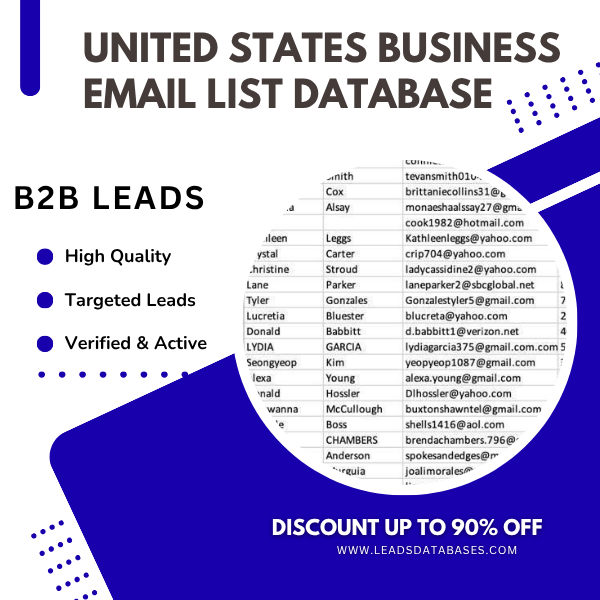
Leads Name: United States Business Email List Database
Accuracy Rate: 90%+ Verified — Less Than 3% Bounce
Coverage: All U.S. States & Cities
Data Fields: Full Name, Email, Phone Number & More
Format: Delivered in Clean Excel (.xlsx) – No Duplicates
Special Feature: Fresh & Ready-to-Use Data That Converts
United States Business Email List Database: B2B Lead Generation and Business Growth
Businesses succeed when they connect with the right people at the right time. Yet many sales and marketing teams still spend countless hours searching for accurate company contacts, verifying email addresses, and organising prospect lists. Outdated information, bounced emails, and poorly targeted campaigns can quickly waste both time and budget.
A United States Business Email List Database helps solve these challenges by providing organised business contact information for companies across a wide range of industries. Instead of manually researching every prospect, businesses can focus on building relationships, generating qualified leads, and creating personalised outreach campaigns. Whether you sell software, financial services, manufacturing equipment, consulting, logistics, or professional services, access to structured business contact data supports more efficient prospecting and marketing.
However, choosing the right business email database requires more than comparing list sizes. Data quality, industry segmentation, geographic coverage, verification practices, and compatibility with your customer relationship management (CRM) system all influence how useful a database will be.
What Is a United States Business Email List Database?
A United States Business Email List Database is a structured collection of business contact information that helps organisations identify companies and connect with business professionals for legitimate B2B sales, marketing, recruiting, partnerships, and business development.
Rather than searching individual company websites one by one, businesses can use an organised database to locate relevant contacts more efficiently.
What Does It Typically Include?
Depending on the provider, a business email database may contain:
- Company name
- Business email address
- Contact name
- Job title
- Department
- Business phone number
- Company website
- Industry classification
- Business address
- City and state
- ZIP Code
- Company size (when available)
These data fields help businesses segment prospects and personalize communication.
Why Businesses Use One
Organisations use business contact databases for many legitimate commercial purposes, including:
- B2B lead generation
- Sales prospecting
- Email marketing
- Customer acquisition
- Appointment setting
- Market research
- Partnership outreach
- Account-based marketing (ABM)
- CRM enrichment
- Business development
Instead of spending hours researching contacts, teams can dedicate more time to building relationships and closing opportunities.
Why Choose Leadsdatabases.com
Selecting a business email database is about finding organised, relevant information that supports your sales and marketing goals. Leadsdatabases.com positions its product as a resource for businesses seeking structured business contact data across multiple industries and locations.
Industry Based Segmentation
Different industries have different buying cycles and decision-makers. Organising contacts by industry allows businesses to create more relevant outreach.
Common industry segments include:
- Healthcare
- Manufacturing
- Information Technology
- Construction
- Financial Services
- Retail
- Hospitality
- Education
- Transportation
- Professional Services
This approach helps marketing teams tailor messaging to each audience.
Geographic Targeting
Location matters in many B2B campaigns.
Businesses often search for prospects by:
- State
- City
- ZIP Code
- Metropolitan area
- Regional market
Geographic filters help sales teams manage territories and support localized marketing campaigns.
Organised Business Information
Rather than relying on a single email address, businesses often benefit from multiple data points that support prospect research and personalized outreach.
Depending on the available records, organised contact information may include company names, contact names, job titles, websites, phone numbers, industry classifications, and business locations.
CRM Friendly Data
Many organisations manage customer relationships through CRM platforms. Structured business data can simplify importing contacts, organising accounts, and maintaining prospect records within existing sales workflows.
Supports Multiple Business Functions
Business contact databases can assist:
- Sales teams
- Marketing departments
- Business development professionals
- Recruiters
- Consultants
- Account managers
When combined with thoughtful outreach, organised contact information becomes a valuable business resource.
What Information Does a Business Email Database Include?
Business email databases typically include more than email addresses. The additional information helps businesses better understand their prospects and personalize communication.
| Information | Purpose |
|---|---|
| Company Name | Identify businesses accurately |
| Contact Name | Personalize communication |
| Job Title | Reach relevant decision-makers |
| Business Email | Professional email outreach |
| Phone Number | Direct sales communication |
| Company Website | Research products and services |
| Industry | Audience segmentation |
| Business Address | Geographic targeting |
| City & State | Regional marketing |
| ZIP Code | Territory planning |
| Department | Department-specific campaigns |
The availability of specific fields varies by provider and dataset.
Benefits of Using a United States Business Email List Database
A United States Business Email List Database can support every stage of the B2B sales process, from identifying prospects to nurturing long-term customer relationships. While the database itself does not guarantee sales, it provides organised contact information that helps businesses conduct outreach more efficiently.
Reach the Right Business Decision-Makers
One of the biggest challenges in B2B marketing is identifying who makes purchasing decisions. A well-structured business contact database helps teams focus on relevant professionals such as company owners, executives, department managers, and procurement teams instead of sending messages to generic inboxes.
Targeting the right audience improves personalisation and creates opportunities for more meaningful business conversations.
Improve B2B Lead Generation
Finding qualified prospects manually can consume valuable time. A business email database streamlines prospecting by organising contacts according to industry, location, company size, or job function.
This allows sales representatives to spend more time engaging with potential customers and less time searching for contact information.
Support Personalised Email Marketing
Generic email campaigns often receive little attention. Businesses achieve better engagement when messages address the recipient’s industry, challenges, or business goals.
For example, a software company may create different campaigns for healthcare providers, manufacturers, and financial organisations. Segmentation makes personalisation easier and helps marketing teams deliver more relevant content.
Expand into New Markets
Businesses planning to grow beyond their existing customer base often need access to companies in new states or industries.
A United States Business Email List Database supports market expansion by helping organizations identify prospects across different regions, including local, regional, and nationwide markets.
Enhance CRM Data
Many organisations manage customer relationships through Customer Relationship Management (CRM) platforms. Adding organised business contact information can improve account records, simplify prospect management, and support ongoing sales activities. Maintaining complete records also helps reduce duplicate entries and keeps sales pipelines organised.
Increase Sales Team Productivity
Sales professionals are most effective when they spend time speaking with prospects rather than collecting contact information.
A structured business database reduces manual research, allowing representatives to focus on:
- Prospect outreach
- Follow-up communication
- Appointment scheduling
- Pipeline management
- Relationship building
Who Uses a United States Business Email List Database?
Businesses across many industries rely on organised business contact data to support marketing, sales, recruiting, and partnership initiatives.
SaaS Companies
Software providers frequently market products to businesses of different sizes and industries. A segmented business database helps SaaS companies identify organisations that match their ideal customer profile and develop targeted outreach campaigns.
Marketing Agencies
Digital marketing agencies, advertising firms, and branding consultants often seek new business opportunities. Business contact databases allow agencies to reach companies that may benefit from services such as SEO, paid advertising, content marketing, and website development.
Manufacturing Companies
Manufacturers regularly build relationships with distributors, wholesalers, retailers, and commercial buyers. Organized business contact information helps identify companies operating within relevant supply chains.
Financial Service Providers
Banks, accounting firms, insurance agencies, investment advisors, and payroll service providers frequently market to businesses. Industry segmentation allows these organisations to tailor their messaging based on the prospect’s needs.
Recruitment and Staffing Firms
Recruiters use business databases to identify organisations that may be hiring or expanding. Contact information for human resources departments and hiring managers supports business development efforts.
Consultants
Business consultants, management advisors, legal professionals, and technology consultants often rely on targeted prospect lists to introduce their expertise to companies seeking specialised services.
Healthcare Suppliers
Healthcare equipment providers, medical software companies, and pharmaceutical service organisations often target hospitals, clinics, laboratories, and healthcare practices.
Logistics and Transportation Companies
Shipping providers, freight companies, warehousing businesses, and supply chain specialists use business databases to identify organisations requiring transportation and logistics services.
How to Choose a Reliable Business Email Database
Not every business database offers the same level of quality. Before making a purchasing decision, businesses should evaluate several important factors.
Data Accuracy
Accurate contact information reduces unnecessary email bounces and helps marketing campaigns reach the intended audience. Ask providers how they maintain their data and whether records are reviewed or updated periodically.
Industry Coverage
Different businesses serve different markets. Choose a provider that offers coverage across the industries most relevant to your products or services.
Examples include:
- Healthcare
- Manufacturing
- Technology
- Construction
- Education
- Retail
- Finance
- Professional Services
Geographic Coverage
Businesses expanding into new markets often require location-based targeting.
Look for databases that support filtering by:
- State
- City
- ZIP Code
- Region
Geographic segmentation simplifies territory management and localized marketing.
Contact Details
A useful business database typically includes more than an email address.
Look for available fields such as:
- Company name
- Contact name
- Job title
- Phone number
- Website
- Industry
- Business location
Additional information supports better prospect research and more personalized communication.
CRM Compatibility
Most organisations use CRM software to organise prospects and customers. Verify that the database can be imported into your existing sales or marketing platform without extensive manual formatting.
Customer Support
Reliable customer support can make implementation easier, especially when importing data or understanding available segmentation options.
Best Practices for Using a Business Email Database
Purchasing a business email database is only the beginning. Success depends on how organizations use the information.
Segment Your Audience
Grouping contacts by industry, location, company size, or job role allows businesses to deliver more relevant messages.
For example, construction companies and healthcare providers often have different priorities. Tailored communication is generally more effective than sending identical emails to every recipient.
Personalise Every Email
Personalisation extends beyond using a recipient’s first name.
Consider referencing:
- Industry challenges
- Business goals
- Company type
- Geographic market
- Relevant products or services
Thoughtful personalisation helps establish credibility and encourages engagement.
Maintain Email List Hygiene
Business information changes over time. Companies relocate, employees change roles, and email addresses may no longer be active. Regularly reviewing and updating contact records helps maintain cleaner marketing lists and supports better email deliverability.
Track Campaign Performance
Monitoring campaign metrics helps businesses understand what works and where improvements can be made.
Common performance indicators include:
- Email delivery rate
- Open rate
- Click-through rate
- Response rate
- Appointment bookings
- Conversion rate
Rather than focusing on one metric, evaluate the entire customer journey.
Keep CRM Records Organised
Maintaining an organised CRM improves collaboration across sales and marketing teams.
Separate records for:
- Prospects
- Existing customers
- Partners
- Previous clients
This organisation supports more effective follow-up and reporting.
Compliance and Responsible Email Marketing
Using a United States Business Email List Database responsibly is just as important as choosing the right data. Effective B2B outreach focuses on relevance, transparency, and respecting recipients’ preferences.
Understand Applicable Email Marketing Laws
Businesses that send commercial emails should comply with the laws and regulations that apply in the regions where they operate or where their recipients are located. In the United States, the CAN SPAM Act establishes requirements for commercial email, including accurate sender information, truthful subject lines, and a clear way for recipients to unsubscribe.
If your organisation communicates internationally, additional regulations may also apply depending on the recipient’s location.
Make Your Outreach Relevant
Sending the same message to thousands of businesses rarely produces meaningful results. Instead, tailor your emails based on industry, company size, business needs, or geographic location.
Relevant communication is more likely to generate genuine conversations and helps protect your sender reputation.
Honor Opt-Out Requests
When a recipient asks to stop receiving emails, process that request promptly. Maintaining an updated suppression list helps prevent future unwanted emails and demonstrates respect for recipient preferences.
Maintain Clean Data
Business information changes regularly as companies grow, relocate, merge, or hire new employees. Periodically reviewing your contact database helps reduce outdated records and supports better email deliverability.
Responsible data management benefits both your marketing performance and your long-term business relationships.
Common Mistakes to Avoid
Even a well-organised business database cannot compensate for poor outreach strategies. Avoid these common mistakes to improve campaign performance.
Buying Data Without Evaluating Quality
Before purchasing a database, understand what information is included, how the contacts are organised, and whether the data aligns with your target audience. Choosing data solely based on list size often leads to inefficient campaigns.
Ignoring Audience Segmentation
Businesses have different challenges depending on their industry, location, and size. Sending identical emails to every contact reduces relevance and limits engagement. Segment your audience to create messaging that addresses each group’s specific needs.
Focusing Only on Email Volume
More emails do not automatically produce better results. Quality outreach, personalisation, and consistent follow-up usually contribute more to successful B2B marketing than simply increasing the number of messages sent.
Neglecting CRM Maintenance
An outdated CRM can create duplicate records, inconsistent information, and missed sales opportunities. Regularly updating customer records helps sales and marketing teams work from accurate information.
Measuring Only Open Rates
Open rates provide useful insights, but they tell only part of the story. Businesses should also evaluate:
- Reply rates
- Qualified leads
- Scheduled meetings
- Pipeline growth
- Customer acquisition
- Return on investment (ROI)
Looking at multiple performance indicators provides a clearer picture of campaign effectiveness.
Conclusion
A United States Business Email List Database can be a valuable resource for organisations seeking to improve B2B lead generation, sales prospecting, and business development. By providing organised business contact information, these databases help companies spend less time researching prospects and more time building professional relationships.
The most effective results come from combining quality data with thoughtful audience segmentation, personalised communication, responsible email marketing practices, and ongoing CRM management. Businesses should evaluate providers carefully, considering factors such as industry coverage, geographic targeting, available data fields, and compatibility with existing workflows.
Leadsdatabases.com offers a product designed to help businesses access structured business contact data for organisations across the United States. When used responsibly and integrated into a well-planned marketing strategy, an organised business email database can support long-term growth, stronger prospecting efforts, and more efficient B2B outreach.
Frequently Asked Questions
1. What is a United States Business Email List Database?
A United States Business Email List Database is an organised collection of business contact information used for B2B sales, marketing, recruiting, and business development. Depending on the provider, it may include company names, business email addresses, contact names, job titles, phone numbers, websites, industries, and locations. Businesses use these databases to identify potential customers, streamline prospect research, and support targeted outreach campaigns across multiple industries.
2. Who can benefit from a business email database?
Many organisations use business contact databases, including software companies, marketing agencies, manufacturers, recruiters, consultants, financial service providers, healthcare suppliers, logistics companies, and professional service firms. Sales teams use the information to identify prospects, while marketing departments build targeted campaigns based on industry, location, or company size. A structured database also supports account-based marketing, partnership development, and customer acquisition strategies.
3. What information is commonly included in a business email database?
A business email database typically contains company names, contact names, business email addresses, job titles, phone numbers, websites, industry classifications, and business locations. Some datasets may also include additional business attributes that help with segmentation and prospect research. The exact fields available vary by provider, so businesses should review the dataset carefully before making a purchasing decision.
4. How should businesses use a business email database effectively?
Businesses achieve better results by segmenting contacts, personalising outreach, maintaining accurate CRM records, and regularly reviewing contact information. Campaign performance should be measured using multiple metrics such as replies, qualified leads, appointments, and conversions rather than relying only on email open rates. Responsible email practices and relevant messaging help build stronger relationships with prospective customers over time.
5. Why consider Leadsdatabases.com for business contact data?
Leadsdatabases.com provides organised business contact data intended to support B2B marketing, lead generation, and sales prospecting. Businesses can explore industry segmentation, geographic targeting, and structured company information that integrates with common sales workflows. Rather than positioning itself through unsupported rankings, the platform focuses on offering organised business contact information that businesses can evaluate according to their own marketing objectives and operational needs.